Showing posts with label England. Show all posts

Friday, September 10, 2021

Top 5 Stones Songs

In response to a friendly challenge to list my top five Rolling Stones songs (up through the album Some Girls (1978), I had to resort to extreme measures to get it done. Mainly this involved creating what I called a "megahit omnibus" to take the top spot. These are the major rock hits that the group is famous for, to wit:
  1. "(I Can't Get No) Satisfaction" (1965)
  2. "Honky Tonk Woman" (1965)
  3. "Street Fighting Man" (1968)
  4. "Jumpin' Jack Flash" (1968)
  5. "Gimme Shelter" (1968)
  6. "Midnight Rambler" (1970)
  7. "Brown Sugar" (1971)
These lucky seven songs clogged up my works because:
  1. Uniqueness: no rock group has ever put out a list of massive power songs of this size.
  2. Indiscernibility: my inability to discern quality differences between these songs.
  3. Dominance: these songs are so huge I would be unable to get to all the rest of the great things the group did.
On this basis, I argued that I would make my number one choice this megahit omnibus* (essentially a seven-way tie). So, my list went as:
  1. Megahit Omnibus (1965-71)
  2. "You Can't Always Get What You Want" (1969)
  3. "Wild Horses" (1971)
  4. "Angie" (1973)
  5. "Faraway Eyes" (1978)
HONORABLE MENTION: "Out of Time" (1966)

COVER: "Love In Vain" by Robert Johnson (1969)

BONUS TRACKS: "Time Is On My Side" (1964); "Something Happened to Me Yesterday" (1967)

PRO TIPS: "Waiting on a Friend" (released in 1981; started in 1972) and "Start Me Up" (1978/1971)

All in all, I included 17 songs when the challenge was to limit it to five. Mea culpa, mea culpa, mea maxima culpa.


*granted absolution upfront for my dalliance, I was later chided as not having really completed the assignment at all (imagine that).

Monday, September 08, 2014

"Equal Sharing of Misery"

“Socialism is a philosophy of failure, the creed of ignorance, and the gospel of envy; its inherent virtue is the equal sharing of misery.”


Monday, October 07, 2013

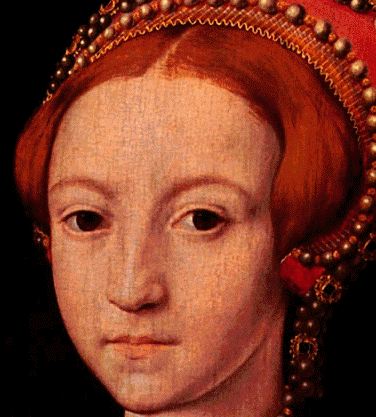
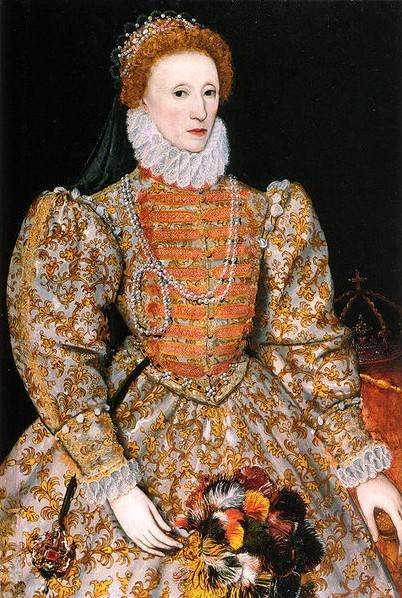
Queen Elizabeth I: A Case of Testicular Feminization?

Serpent or rose?

Abstract

The purpose of this paper is to provide support for the hypothesis that Queen Elizabeth I was a case of testicular feminization (male pseudohermaphroditism) and for the explanation of her contemporaries and of some historians, that she never married because of some congenital defect.

The phenotypical characteristics of the testicular feminization syndrome are strikingly similar to descriptions of Elizabeth's appearance, personality, behaviour, and particularly, to those physical defects which her contemporaries believed made her sterile and unwilling to marry.

Modern historians have rejected the "physical defect" explanation of Elizabeth's refusal to marry in favour of a "psychological" explanation. The basic premise of the "psychological" explanation, that Elizabeth was physically capable of bearing children is unsound for a number of reasons.

Recent advances in our understanding of the process of sexual differentiation, particularly, the description of the testicular feminization syndrome, justify a re-evaluation of the "physical defect evidence" of Elizabeth's contemporaries.
 1985 July; 17(3): 277-84 by R. Bakan (PDF for sale).

See also: "Was Queen Elizabeth I a Man?"

Tuesday, January 22, 2013

Start of a mini Ice Age?

Icicles in Trafalgar
"As a species, we human beings have become so blind with conceit and self-love that we genuinely believe that the fate of the planet is in our hands — when the reality is that everything, or almost everything, depends on the behavior and caprice of the gigantic thermonuclear fireball around which we revolve.

"By my calculations, this is now the fifth year in a row that we have had an unusual amount of snow; and by unusual I mean snow of a kind that I don’t remember from my childhood: snow that comes one day, and then sticks around for a couple of days, followed by more.

"I remember snow that used to come and settle for just long enough for a single decent snowball fight before turning to slush; I don’t remember winters like this. Two days ago I was cycling through Trafalgar Square and saw icicles on the traffic lights; and though I am sure plenty of readers will say I am just unobservant, I don’t think I have seen that before.

"I see from the BBC website that there are scientists who say that “global warming” is indeed the cause of the cold and snowy winters we seem to be having. A team of Americans and Chinese experts have postulated that the melting of the Arctic ice means that the whole North Atlantic is being chilled as the floes start to break off — like a Martini refrigerated by ice cubes.

"I wish I knew more about what is going on, and why. It is time to consult once again the learned astrophysicist, Piers Corbyn. According to Piers, global temperature depends not on concentrations of CO2 but on the mood of our celestial orb. There are times in astronomical history when the Sun has been churning out more stuff — protons and electrons and what have you — than at other times. When the Sun has plenty of sunspots, he bathes the Earth in abundant rays.

"When the solar acne diminishes, it seems that the Earth gets colder. No one contests that when the planet palpably cooled from 1645 to 1715 — the Maunder minimum, which saw the freezing of the Thames — there was a diminution of solar activity. The same point is made about the so-called Dalton minimum, from 1790 to 1830. And it is the view of Piers Corbyn that we are now seeing exactly the same phenomenon today . .
'There is every indication that we are at the beginning of a mini ice age. The general decline in solar activity is lower than NASA’s lowest prediction of five years ago. That could be very bad news for our climate. We are in for a prolonged cold period. Indeed, we could have 30 years of general cooling.'
"It doesn’t seem as nuts as it did five years ago. I look at the snowy waste outside, and I have an open mind."

FROM: "It’s snowing, and it really feels like the start of a mini ice age: Something is up with our winter weather. Could it be the Sun is having a slow patch?" by Boris Johnson (Mayor of London since 2008); January 21, 2013.

Sunday, January 20, 2013

Shakespeare's "Master": Fulke Greville (1554 – 1628)

Greville
Fulke Greville, 1st Baron Brooke, desired to be known "to posterity under no other notion than of Shakespeare's and Ben Jonson's Master," according to David Lloyd in his 1670 The states-men and favourites of England since the reformation.1,2

The source of this "Master" statement was not Greville directly, but English poet and playwright William Davenant—rumored godson, or even biological son, of Shakespeare—supposedly speaking of Greville.3

The Davenant parentage rumors, in turn, may have originated with the Samuel Butler quote: "It seemed to him that he writ with the very same spirit that Shakespeare [did], and seemed content enough to be called his son."4

What the "Master" statement might mean, or why Shakespeare and Jonson would be mentioned together in this context, is open to question.

The title of The Master of Shakespeare (2007) by A. W. L. Saunders, a book supporting the proposition that Fulke Greville was the author of the works generally attributed to William Shakespeare,5 seems to derive indirectly from the David Lloyd reference.

Fulke Greville as Shakespeare

The U.K.-based Shakespearean Authorship Trust—established in 1922 to "seek, and if possible establish, the truth concerning the authorship of Shakespeare's plays and poems"6—includes Greville in its list of potential authors.7

Greville ranked tenth in a top-ten list of "the most notable possible authors of the works of Shakespeare" determined by TopTenz.net in September 2011.8 Included in the list were other lesser-known authorship candidates: Henry Neville, Mary Sidney Herbert, William Stanley, Roger Manners, and Emilia Lanier. They also included a group theory of authorship in their ranking. Topping the list were the better-known candidates: Christopher Marlowe, Francis Bacon, and Edward de Vere.9

Commenting on Thom Gunn's 2009 The Selected Poems of Fulke Greville, Robert Pinsky, Slate Magazine Poetry Editor and Poet Laureate Consultant in Poetry to the Library of Congress (United States Poet Laureate) 1997-2000, noted: "Greville is probably the greatest poet unknown to many readers. The force of his imagination, his driven intelligence and his eruptive cadences, merits comparison with Donne, Herbert and Shakespeare."10

SEE ALSO: Fulke Greville, Lord Brooke, 1554-1628: A Critical Biography by Joan Rees; University of California Press, 1971 - 238 pp.

1. full title: The states-men and favourites of England since the reformation : their prudence and policies, successes and miscarriages, advancements and falls; during the reigns of King Henry VIII. King Edward VI. Queen Mary. Queen Elizabeth King James. King Charles I (William and Mary Wolf Law Library)
2. Fulke Greville (1554-1628), Biography, Poetry Foundation.
3. "Greville's claim to be 'the master of Shakespeare'", Fulke Greville, Lord Brooke; Master of Shakespeare, September 14, 2007.
4. "Biography of Sir William Davenant", PoemHunter.com.
5. Saunders, A. W. L, The Master of Shakespeare, WorldCat Identities, 2007; 416 pp.
6. History/Mission, The Shakespeare Authorship Trust.
7. Other Candidates, The Shakespearean Authorship Trust.
8. prompted by the upcoming release of Anonymous, a major motion picture on the Shakespeare authorship question.
9. Andrews, Evan, "Top 10 Possible Authors For The Works of Shakespeare", TopTenz.net; September 2, 2011.
10. The Selected Poems of Fulke Greville, edited with an introduction by Thom Gunn (and afterword by Bradin Cormack), The University of Chicago Press, 1969, 2009; 184 pp.

Thursday, August 11, 2011

Prince Tudor II

The Prince Tudor Theory Part II advances the belief that Oxford was the son of Queen Elizabeth I, born in July 1548 at Cheshunt, England. This theory asserts that Princess Elizabeth, then fourteen years old, had a child by her stepfather, Thomas Seymour, and that the child of this affair was secretly placed in the home of John de Vere, 16th Earl of Oxford, and raised as Edward de Vere, 17th Earl of Oxford.

Oxford: Son of Queen Elizabeth I (2001) by Paul Streitz is the primary work advancing Prince Tudor Theory Part II. In addition to making Oxford the queen's son by Seymour, the book also revives the notion that the "Virgin Queen" had children by the Earl of Leicester. These were Robert Cecil, 1st Earl of Salisbury, Robert Devereux, 2nd Earl of Essex, Mary Sidney and Elizabeth Leighton. Finally, she bore Henry Wriothesley, who was the result of an incestuous relationship between Oxford and his mother, the Queen.

This aspect of the Prince Tudor Part II theory is not widely accepted among Oxfordians; most believe that the established date of birth for Oxford (April 12, 1550) is accurate. Thus Elizabeth (born September 7, 1533) would have been 17 years older than Oxford.

Streitz also asserts that Oxford did not die in 1604, but was abducted. The book claims that Oxford was banished to the island Mersea in the English Channel, where he completed Shake-speares Sonnets and The Tempest. He was also the "hidden genius" behind the King James Bible (published in 1611), the unified style of which indicates that it was written by "one clear hand", though much was retained from earlier translations.[25] He died at the end of 1608. This projected date of death is based on the claim that the first written statement referring to Oxford as deceased was in January 1609, followed by the publication of the sonnets ascribed to the "ever-living" poet. Streitz follows the common Oxfordian argument that "ever-living" is a euphemism for "deceased".

SEE: http://en.wikipedia.org/wiki/Prince_Tudor_theory

Thursday, August 04, 2011

Sonnets by Mary, Queen of Scots?

The Casket Letters Discovered

On the 20th June 1567, a few days after Scottish rebels apprehended Mary, Queen of Scots, servants of James Douglas, 4th Earl of Morton, allegedly found a silver casket of . .
  • eight letters
  • two marriage contracts,* and 
  • twelve sonnets 
. . in the possession of James Hepburn, 4th Earl of Bothwell and third husband of Mary Queen of Scots.
------
'John Guy writes of how the sonnets found in the casket “were said to be Mary’s own reflections on her adultery” with Bothwell and proof “that her consuming passion for Bothwell gave her a powerful motive for murder.” However, Guy points out that they are highly unlikely to be genuine as “they are extremely clumsy and would pass only with the greatest difficulty as the work of a native French speaker” and they do not fit with the “genre of courtly love poetry” with which Mary was familiar. He also points out that they can be read as religious poetry.'

*which apparently proved that Mary had agreed to marry Bothwell before his divorce.

My Heart is My Own: The Life of Mary Queen of Scots, John Guy (2004)

SEE: The Elizabeth Files

Mary, Queen of Scots