Turns out that by one temporal range—either 4am to 4pm or midnight to midnight—March 2014 ranks one way against previous years, by the other time range another. The difference, of course, coming down to tenths of degrees.
The weathermen reporting this difference make allowance for this (to the rest of us) unfamiliar nuance, but seem to leave out a dozen others. In comparing one year's "climate" to another's, even in a relatively small area like St. Johnsbury, meteorologists would also have to consider . .
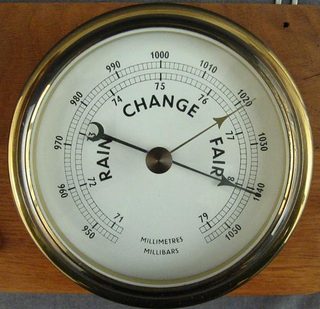
- Technology: what kind of measuring devices were in the two periods; analog vs. digital; precision; etc.
- Readings: from where exactly were readings taken; distance from ground; how often; by whom; how were data recorded/preserved; etc.
- Development: what was the state of the area's development; population; asphalt use; building patterns; etc.
- Weather patterns: geological shape of area; how does air move through it; where do temperature gradients occur; etc.
Meteorologists could develop this list further if prompted. If possessed of a professional integrity, they might tell you there's actually no way to make a fine-point comparison between temperatures in the 1890s and those in the 2010s.
CONSIDER: there is no acceptable, consistent, continuous methodology for recording the average temperature of a region. Until such an approach is developed and agreed to, such comparisons are pure folly—especially where they involve cutting degrees into shaved particles.
Please discuss amongst yourselves.
EXTRA CREDIT: How might this relate to the discussion of global warming?
Please discuss amongst yourselves.
EXTRA CREDIT: How might this relate to the discussion of global warming?


No comments:
Post a Comment