Sunday, July 31, 2011
Saturday, July 30, 2011
Friday, July 29, 2011
Shakespeare as State Secret
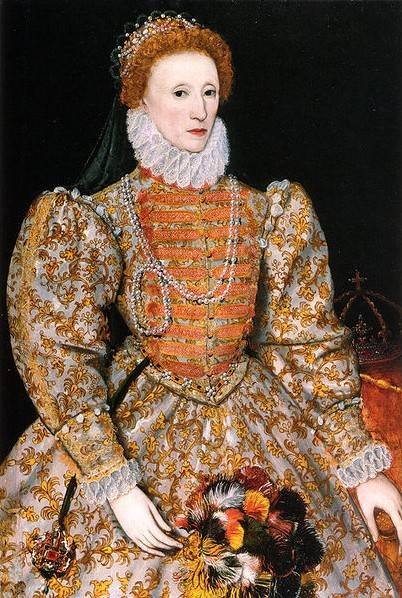
Numerous aspects of the Shakespeare authorship issue could raise it to the level of state interest, e.g., meaning the State might still be involved in keeping what happened secret. Half a millennium may seem like a long time in the United States, but in Europe not so much. What happened so long ago still resonates strongly among current inhabitants. As possibly examples of what might drive States to take a hand in the Shakespeare authorship game:
- Royal scandal: depending on the degree of messiness of what exactly happened in Elizabeth's court, things perhaps even worse than we know about, this could have a negative impact on the view of English royalty today. Would the English people (half of which already wish to) decide to abolish the royalty once and for all?
- Royal succession: Has succession been properly done? Should all of royal/English history be rewritten? How badly would this reflect on the current State?
- Church battle: King Henry VIII, Elizabeth's father, abolished ties with the Vatican and established the national English church (with himself at it's head). From then on to practice Catholicism was heretical throughout the land. All this happened in Elizabeth's court not too long after the changeover, meaning the battle is still quite fresh. Many of the players are regarded as aligned, Catholic or Protestant, leading to friction (and death) all around--Mary, Queen of Scots being a major example. De Vere was regarded as being part of the fight by many, as were others. All of this could play out today, with both the English State and the Vatican (which had an army in those days).
- Espionage/spies: William Cecil, Elizabeth's chief administrator, was a cloak-and-dagger type, using the English 'secret service' to work his ends. To what extent is this the predecessor to modern-day British intelligence, how sensitive are these early beginnings today? Christopher Marlowe, a candidate for Shakespeare authorship, is widely regarded as an actual spy. How many of these lords and earls travelling abroad were on State business? The dedication page to the Sonnets might derive from (or be written to) secret service coders.
". . it was the Tudor era’s coding method. Jerome Cardan . . invented the system, hence the name for the rectangle, Cardano Grille."
WJ Ray from Rollett in Reverse on diplomatic use of the code seemingly used for the Sonnet dedication
“. . the usual formula made use of in the case of secret service money.”
B. M. Ward's take on language used in granting De Vere an annuity by Elizabeth
- Literary treasure/keeper of language: Shakespeare is regarded as a national treasure, not only the greatest writer in the English language ever, but also the creator/recorder of what would become the contemporary English we now speak. He invented many of the words that now have wide currency. The Shakespeare Industry, visitors to Stratford, etc. accounts for huge revenues. This makes his 'provenance' worth protecting for the State.
'He is praised not only as the greatest writer in English but as “the greatest man who ever lived” by Lytton Strachey and as “the most influential man in history” by one of his contemporary biographers. For Thomas Carlyle Shakespeare was a “Saint of poetry”, for Henry Melville “a kind of deity”.'
Rodney Croome
- Elizabeth: the first major female monarch of England (we try to forget Bloody Mary), her name is on the Elizabethan Era which has given us so much--including Shakespeare itself. How bad would it be for the English people, and for the reputation of England, to discover all manner of nastiness about the Virgin Queen?
Interpretations of 'Will Shake Speare'
Many possible interpretations might derive from the seeming sentence 'Will Shake Speare' with or without the 'Will' (as it often appears):
*Edward de Vere, a major "candidate" for Shakespeare authorship, accidentally speared someone while practicing fencing (an event seemingly mirrored in Hamlet); an earlier de Vere speared a wild boar (reference to such event appearing in the family crest).
**Edward de Vere served in this role.
- Accusation/Accuser: that the writer is making an accusation against somebody, or intends to in the future--the pen being mightier than the sword;
- Jousting: a reference to the sport, or that the author is known for jousting;
- Historical event: referring to something in the author's past, or perhaps his family history, involving a spear;*
- Sword of State: the Lord Great Chamberlain historically carried it;**
- Athena: the Greek goddess, presented holding a long spear, and her involvement in the arts; or
- Lewdness: referring to a certain part of human anatomy.
*Edward de Vere, a major "candidate" for Shakespeare authorship, accidentally speared someone while practicing fencing (an event seemingly mirrored in Hamlet); an earlier de Vere speared a wild boar (reference to such event appearing in the family crest).
**Edward de Vere served in this role.
'To Have No Creed'
To be a weed
. . Without a flower
To lust for seed
. . The base of power
By choking good from all.
To have no creed
. . No ivory tower
That those you feed
. . Must scrape and cower
That they must heed
. . Your screed and glower.
I have been freed
. . No longer dour
In my new breed
. . I fix the hour.
July 29, 2011
. . Without a flower
To lust for seed
. . The base of power
By choking good from all.
To have no creed
. . No ivory tower
That those you feed
. . Must scrape and cower
That they must heed
. . Your screed and glower.
I have been freed
. . No longer dour
In my new breed
. . I fix the hour.
July 29, 2011
2011 Rattle Poetry Prize
1st prize: $5,000
15 Finalists: $100
POSTMARK DEADLINE: August 1st, 2011
Send entries to:
RATTLE
Poetry Prize
12411 Ventura Blvd
Studio City, CA 91604
GUIDELINES: http://www.rattle.com/rpp/hardguide.htm
15 Finalists: $100
POSTMARK DEADLINE: August 1st, 2011
Send entries to:
RATTLE
Poetry Prize
12411 Ventura Blvd
Studio City, CA 91604
GUIDELINES: http://www.rattle.com/rpp/hardguide.htm
Thursday, July 28, 2011
Shakespeare Authorship: The Importance of Knowing Who Wrote What
Quite beyond 'The play's the thing!' adherence, knowing who actually wrote what in the Shakespeare canon is important for a number of reasons:
- Proper attribution--the authors deserve proper attribution for their works, especially given the impact they've had on literature and life since, and especially considering that whatever led them to cloak their hand is now long passed by history. How important would it be to their descendants to know of their contribution to literature?
- Righting magical conception--properly attributing the works to those who might actually have a chance at creating them, by dint of position/situation and education/life experience, rights the fantastical/magical explanation concocted to explain how one without these attributes could have become the greatest writer in English-language history.
- Meaning and purpose--knowing proper authorship helps clarify meaning in the works and helps with understanding what motivated their creation, and what was being promoted by their writing.
- Historical context--knowing who wrote what and when helps place the works in their proper historical context, further aiding the above.
- Behind the scenes--we might learn (finally) what was behind the scheme to place these works behind a pen-name front.
Wikipedia's Shakespeare Problem
"This heresy has a century of scholarship behind it—its advocates include Walt Whitman, Sigmund Freud, Mark Twain, Henry James, Helen Keller, Derek Jacobi, and Malcolm X (as well as, in the interest of full disclosure, the present author). Yet a disproportionately large share of Wikipedia's 'Shakespeare authorship question' entry, a page devoted to the controversy, has been written by proponents of the traditional Shakespeare-as-author thesis. This imbalance is the result of an 18-month battle that included mediation and arbitration hearings."
SEE: IEEE Spectrum
SEE: IEEE Spectrum
Wednesday, July 27, 2011
The top 10 greatest conspiracy theories
"The Roswell Incident of 1947 spawned conspiracy theories by the score. Here is a list of the world's greatest conspiracy theories."
SEE: Telegraph
SEE: Telegraph
Scientists discover tipping point for the spread of ideas
"'When the number of committed opinion holders is below 10 percent, there is no visible progress in the spread of ideas. It would literally take the amount of time comparable to the age of the universe for this size group to reach the majority,' said SCNARC Director Boleslaw Szymanski, the Claire and Roland Schmitt Distinguished Professor at Rensselaer. 'Once that number grows above 10 percent, the idea spreads like flame.'"
SEE: Minority rules: Scientists discover tipping point for the spread of ideas
Tuesday, July 26, 2011
From 'Shakspere' to 'Shakespeare' (Wikipedia Discussion Entry)
Thank you for the correction on "manuscripts". I knew this was a dangerous term to use, I just didn't know the better one to apply in the moment (just putting it in quotes might have helped). Your further comments only further support the need for a section devoted to the issues of applied names in this case. This would be a good place for you to make your above arguments, properly attributed. But, in an encyclopedic article dedicated to chasing down the facts in a case of literary history (and mystery for many), an explanation at least is needed to explain why historians, educators, publishers, researchers, etc. would go from a man's taken name of "Shakspere" to "Shakespeare" (hyphen removed)—especially when the latter term comes separately as an attribution to the greatest body of literature in the English language. To do so skips over important factual details necessary for establishing, or controverting, theories of attribution. More importantly to the unconvinced, it might appear to be a too-convenient closing of the literary history/mystery loop: what starts out as a pen-name for a hidden author, gets attributed later to a similar-sounding name on a real person, ends up finally conflated as the same thing. This might appear to arise from a biased view of the facts, there being no other logical way to go from "Shakspere" to "Shakespeare".[[User:Empirecontact|Artaxerxes]] ([[User talk:Empirecontact|talk]]) 19:09, 28 April 2011 (UTC)
What's in a Name? (Wikipedia Discussion Entry)
This is not so much a matter of 'Oxfordian' imagination, or any particular group's. This is a matter of providing an encyclopedic treatment of an issue in as fair and even-handed a manner as possible, carefully presenting the facts of the case without closing off discussion in one direction or another. Then, whoever it may be who encounters this article, and considers the facts therein contained, may come to his own conclusions—or set off on new avenues of exploration as a result. The deflection of critical issues related to an author's name to 'Victorian culture' is an interesting one, same as for saying this is one group's interest over another's. (I will say that I myself have seen published books of 'Shakespeare's' works in used bookstores or in libraries attributed to 'Shakspere' making me wonder what has happened since and why.) The deflection that the discussion of an author's real name and what has been attributed to him should have gone on another page and maybe won't yet (for other reasons) fails to impress, also. 'What's in a name?' as the Bard himself might ask. In this case perhaps everything. The numerous related issues need to be put forth directly, likely as the very first section, as without such a carefully presented discussion only confusion can follow. That you yourself 'have no answer to' the question of how we went from 'Shakspere' to Shakespeare' has not much bearing on the discussion. The point is that without a logical explanation for making this jump, it leaves open the very real possibility that it was as I have outlined: pen-name made real by forcing it on to somebody who never called himself that for the purpose of closing off the discussion. (Sending me to an anti-Oxfordian 'discussion' without telling me that's what it was does not strengthen your case much.) Whether you or others don't believe hyphens connote pen-names isn't so important: enough people think they might. For me it's more interesting that 'Shake-speare' or 'Shakespeare' is a sentence made up of a verb and noun (not having investigated how they might have spelled the latter then). Much has been made of how this might related to an author's identity; a discussion which certainly needs to be alluded to here. The injection of a hyphen into a man's name is even more strange to me than changing the spelling. What could be the reason for going to all that trouble? It certainly seems to signify something, even if only to emphasis the meaning of the sentence contained in the name.[[User:Empirecontact|Artaxerxes]] ([[User talk:Empirecontact|talk]]) 21:26, 28 April 2011 (UTC)
Sunday, July 24, 2011
Basic Assumptions When Interpreting Shakespeare's Sonnets
Basic assumptions generally underlying any interpretation of the Sonnets attributed to Shakespeare might be reconsidered . .
- Play author(s): that the author(s) of the poems is/are the same as for the plays attributed to Shakespeare; author(s) of the poems might be different than for the plays.
- Single authorship: that they were written by a single author; there might have been multiple authors, including collaborators (considered an orthodox possibility with the plays).
- Intended receivers: that the poems were intended to be received by Queen Elizabeth or Henry Wriothesley, 3rd Earl of Southampton; anyone (or no one) might have been the target/receiver of the poems.
- Time period: that they were written in the Elizabethan era; they might have been written at any time prior to publication.
- Sexuality/gender: that they represent heterosexual (or homosexual) longings, that gender is always he or she, and that when gender is specifically stated it applies to a person; gender usage might refer to something more general like Love itself.
- Truth/allusion: that they tell the truth of someone's experience; they might be just 'poetic license', meant to be part of a larger artistic creation, fantasies in the artist's mind, or simply allusions.
- Region/language: that they were written in England, by English people, and in English originally; they might have been written outside England, by foreigners, or translated from a foreign language.
Basic Shakespeare Authorship Issues
Before getting to the determination of who the actual author/s was/were of the body of work attributed to 'Shakespeare', a number of basic authorship issues might tend to complicate matters . .
- Sources: how much of what we now recognized as the works of 'Shakespeare' comes directly from the sources (read other authors)?
- Collaboration: who is thought/known to have collaborated with what we're identifying as the 'primary' writer? how many writers worked on a given project?
- Editing/proofing: what was the actual process for putting words down and getting them published? who stood in between pen and press? how were works reviewed/proofed? who did this actual publishing work? how was this different for poems than for plays?
- Players: from what version (from what provenance) of text did the players work to create the stage parts/roles? what was their subsequent input/effect on the texts? who directed the works and what was their input/effect on the texts? to what extent do versions of the stage plays we now have come from player memories?
- Interpretations/revisions: how were these player memories transferred to the 'original' published texts (folios)? how have subsequent interpretations and revisions (many over the years) changed the text? how does what we have now relate to the original works? ('corrections' and other revisions are always being made with each new printing)
- Contemporary understanding: how does our contemporary understanding of literary authorship affect the way we look at the question overall?
The Naming of Shakespeare
Naming terms used when discussing this authorship question seem to be understood differently by those applying them. Particularly . .
- 'Shake-speare'--author's attribution appearing on many (most?) of the earliest publications of works (later to be attributed generally as 'Shakespeare'). To many the hyphen suggests this is a pen name of some sort (the interpreted meaning of which is used to indicate an actual author).
- 'Shakespeare'--the literary body of work generally attributed in this manner by contemporary publishers. Many/most believe/assume this also refers to the actual name of the (single) author of this material.
- 'Shaksper'--the actual historical figure assumed by many/most to be the (only) author of the works attributed to 'Shakespeare' (though he never called himself this in life). They make the leap from the variety of name spellings he used for himself to 'Shakespeare', neatly fitting man to body of work so attributed.
Shakespeare as God
"For me, Shakespeare is God," says Harold Bloom. How many others might say the same? As soon as he becomes a divinity--perhaps the believer's only one, or at least the one above all others--what more can be said? It would seem to be beyond reasonable discussion at that point; certainly impervious to logic. You're now dealing in the world of religious fervor, where you must tread lightly. Show maximum respect for a man's beliefs, etc. All those who disagree are labelled heretical apostates.
How to change such a mind? Would seem more of a conversion--a religious conversion, or at least a conversion from a fervent-believer mentality to a more fact-based/rational/logical one. Chance for success: slim. Unless . . such beliefs drive a major study into why we believe what we do, and how to change it.
One part of religious belief seems to be the human need for a mystery. Certainly the nature of how these works have come down to us--through a rather convoluted (and not altogether understood) process--to be regarded as the greatest body of literature in English is mysterious. That they would be attributed to the most unlikely creature, lacking even the rudimentary tools/abilities necessary to perform such a miracle? It's like a Creation Myth all its own. And how many such massive (and massively important) bodies of work have at their core an authorship mystery? Certainly what's attributed to Homer, the Bible, Cervantes, etc.
If the desire is to experience/enjoy a mystery, the factual road out might seem quite unattractive to the Believer.
How to change such a mind? Would seem more of a conversion--a religious conversion, or at least a conversion from a fervent-believer mentality to a more fact-based/rational/logical one. Chance for success: slim. Unless . . such beliefs drive a major study into why we believe what we do, and how to change it.
One part of religious belief seems to be the human need for a mystery. Certainly the nature of how these works have come down to us--through a rather convoluted (and not altogether understood) process--to be regarded as the greatest body of literature in English is mysterious. That they would be attributed to the most unlikely creature, lacking even the rudimentary tools/abilities necessary to perform such a miracle? It's like a Creation Myth all its own. And how many such massive (and massively important) bodies of work have at their core an authorship mystery? Certainly what's attributed to Homer, the Bible, Cervantes, etc.
If the desire is to experience/enjoy a mystery, the factual road out might seem quite unattractive to the Believer.
Friday, July 22, 2011
What Was She Doing?
"Miss Erickson shows us an Elizabeth sitting in the center of a court grown fantastic in fashion and revelry, there ogling male courtiers who sported earrings, velvet hats with two-feet-long feathers, pageboy curls, curled mustaches with beards not only styled in a myriad of shapes but dyed in a myriad of colors to match their clothes: 'From Nordic blond to fiery Irish red to amber or auburn, any hue was possible, along with the startling, but undeniably trendsetting, shades of purple and orange and speckled yellow.'"What was Queen Elizabeth doing, merely using sexuality to achieve the 'victory of royal sovereignty over male authority' as Carolly Erickson, authoress of The First Elizabeth, suggests? Did the lesser-advantaged hussies, wenches, slatterns, jades, trollops, strumpets, and otherwise loose women of the day require such 'sovereignty' to misbehave?
SEE: MARRIED TO ENGLAND - NYTimes.com review of THE FIRST ELIZABETH By Carolly Erickson. Illustrated. 447 pp. New York: Summit Books. $19.95.
Saturday, July 16, 2011
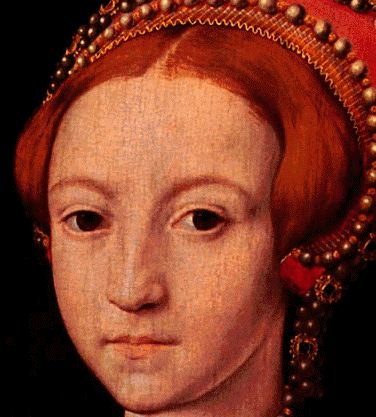
Was Queen Elizabeth I a Man?
![]() |
| Elizabeth as a girl |
As the last of the Tudor line, her most urgent duty was to provide an heir. Instead she declared herself the Virgin Queen, vowed never to take a husband, and stuck to her oath, even though it provoked a war with Spain. She defiantly proclaimed: "I have the heart of a man, not a woman, and I am not afraid of anything."1
Because she died "without issue", the House of Stuart came to power and the English throne was handed over to a Scottish king.
Steve Berry apparently thinks Elizabeth was telling the actual truth: she had the heart of a man because she was one. He spent a year and a half researching this possibility for his novel The King’s Deception in 21st-century London.
![]() |
| somebody else in drag? |
Bram Stoker and "The Bisley Boy"
Bram Stoker, famous author of Dracula, stumbled on an interesting legend regarding Queen Elizabeth and his digging resulted in a chapter of his book “Famous Imposters” (1910) being devoted to “The Bisley Boy”.![]() |
| (needing a shave) |
It was in the village of Bisley that Irving came across the legend of “The Bisley Boy” and he passed the story on to Stoker who was keen to investigate. Both Stoker and Irving were intrigued by the fact that the village’s May Day celebrations involved a boy May Queen dressed in Elizabethan costume. Such traditions are generally based on an historical event or legend and Stoker wanted to find out more about this one.2
Stoker, hearing stories that a coffin had been discovered by a clergyman at Bisley during the early 1800s with the skeleton of a girl dressed in Tudor finery, first captured the legend in book form.3 For the man who popularized the legend of Dracula, it was the most plausible explanation for why Elizabeth never married.1
1. "Is this proof the Virgin Queen was an imposter in drag? Shocking new theory about Elizabeth I unearthed in historic manuscripts" by Christopher Stevens, Daily Mail; June 7, 2013.
2. "The Bisley Boy" by Claire, The Elizabeth Files: The REAL TRUTH about Queen Elizabeth I; November 4, 2009.
3. In 2013 Sarah Skye updated and published a Kindle version entitled Was Queen Elizabeth a Man? - The Bisley Boy Story.
Friday, July 15, 2011
"Long Black Limousine"
by Vern Stovall and Bobby George
(chords)
(G)There's a long line of (C)mourners headed down our little (G)street
Their fancy cars are such a sight to (D7)see
They're (G)all of your (C)new friends who knew you in the (G)city
And now the've finally (D7)brought you back to (G)me
(G)You said when you (C)left me some day you'd be re (G)turnin'
In a fancy car for all the town to (G)see
The whole town is (C)watching, you've finally got your (G)dream
You're ridin' in that (D7)long black limo (G)sine
The (C)paper told of how you lost your (G)life
The party and the fatal crash that (D7)night
The (G)race upon the (C)highway, the curve nobody (G)seen
And now you're in that (D7)long black limou (G)sine
(Instrumental)
Through (C)tears I watch as you go (G)by
A chauffeur at the wheel dressed up to (D7)clean
I'll (G)never love an (C)other my heart and all my (G)dreams
Ride with you in that (D7)long black limou (G)sine
Ride with you in that (D7)long black limou (G)sine.
(chords)
(G)There's a long line of (C)mourners headed down our little (G)street
Their fancy cars are such a sight to (D7)see
They're (G)all of your (C)new friends who knew you in the (G)city
And now the've finally (D7)brought you back to (G)me
(G)You said when you (C)left me some day you'd be re (G)turnin'
In a fancy car for all the town to (G)see
The whole town is (C)watching, you've finally got your (G)dream
You're ridin' in that (D7)long black limo (G)sine
The (C)paper told of how you lost your (G)life
The party and the fatal crash that (D7)night
The (G)race upon the (C)highway, the curve nobody (G)seen
And now you're in that (D7)long black limou (G)sine
(Instrumental)
Through (C)tears I watch as you go (G)by
A chauffeur at the wheel dressed up to (D7)clean
I'll (G)never love an (C)other my heart and all my (G)dreams
Ride with you in that (D7)long black limou (G)sine
Ride with you in that (D7)long black limou (G)sine.
Thursday, July 14, 2011
Pvt. Andrew J. Farrand dies at Andersonville 12.21.1864
Andrew J. Farrand
Birth: unknown
Death: Dec. 21, 1864
Residence Berkshire VT;
Enlisted on 10/30/1861 as a Private.
On 11/19/1861 he mustered into "B" Co. VT 1st Cavalry
He Re-enlisted on 12/30/1863
He died of disease as POW on 12/21/1864 at Andersonville, GA
He was listed as:
Wounded 5/23/1863 (place not stated)
POW 5/5/1864 Craig's Meeting House, VA
Roll of Honor Information:
Date of Death listed as 12/21/1864.
Burial:
Andersonville National Cemetery
Andersonville (Sumter County)
Sumter County
Georgia, USA
Plot: Gravesite: 12317
Created by: Bev (inactive)
Record added: Mar 30, 2007
Find A Grave Memorial# 18686870
SOURCE: http://www.findagrave.com/
Birth: unknown
Death: Dec. 21, 1864
Residence Berkshire VT;
Enlisted on 10/30/1861 as a Private.
On 11/19/1861 he mustered into "B" Co. VT 1st Cavalry
He Re-enlisted on 12/30/1863
He died of disease as POW on 12/21/1864 at Andersonville, GA
He was listed as:
Wounded 5/23/1863 (place not stated)
POW 5/5/1864 Craig's Meeting House, VA
Roll of Honor Information:
Date of Death listed as 12/21/1864.
Burial:
Andersonville National Cemetery
Andersonville (Sumter County)
Sumter County
Georgia, USA
Plot: Gravesite: 12317
Created by: Bev (inactive)
Record added: Mar 30, 2007
Find A Grave Memorial# 18686870
SOURCE: http://www.findagrave.com/
If This Don't Make You Cry . .
"She Once Lived Here"
by Autry Inman
C F C
A mayor gave me the key to the city
D7 G7
The welcome wagons already appear
C F C
But again I'll be packing and leaving
F C
For it's plain now that she once lived here
G7 C
I see her face in the cool of the evening
G7 F
I hear her voice in each breeze loud and clear
C F C
Oh there must be a town without memories
F C
But not this one for she once lived here
F C
It may be that I'll never forget her
D7 G7
Cause she's love and love lives everywhere
C F C
Could it be that I'll always be saying
F C
I've gotta go now for she once lived here
repeat #2
F C
But not this one for she once lived here.
by Autry Inman
C F C
A mayor gave me the key to the city
D7 G7
The welcome wagons already appear
C F C
But again I'll be packing and leaving
F C
For it's plain now that she once lived here
G7 C
I see her face in the cool of the evening
G7 F
I hear her voice in each breeze loud and clear
C F C
Oh there must be a town without memories
F C
But not this one for she once lived here
F C
It may be that I'll never forget her
D7 G7
Cause she's love and love lives everywhere
C F C
Could it be that I'll always be saying
F C
I've gotta go now for she once lived here
repeat #2
F C
But not this one for she once lived here.
Sunday, July 03, 2011
"Will You Take This Body"
Will you take this body
. . To have and to hold
For richer or poorer
. . For when the nights grow cold?
Will you keep me safely
. . Until we both grow old
And fill my heart with gladness
. . When weak or when bold?
CHORUS
Promise to be true
All the days of our lives
Until Death do us part
In good times and in bad.
Will you take this sinner
. . So fearful and so weak
Make of me a winner
. . Help me turn the other cheek?
Will you take this sinner
. . So fearful and so weak
Make of me a winner
. . Like the blessed and the meek?
REPEAT CHORUS
July 3, 2011
For a little on back story, and a snatch of a possible tune to sing it to, see http://j-tv.me/nTvepT.
. . To have and to hold
For richer or poorer
. . For when the nights grow cold?
Will you keep me safely
. . Until we both grow old
And fill my heart with gladness
. . When weak or when bold?
CHORUS
Promise to be true
All the days of our lives
Until Death do us part
In good times and in bad.
Will you take this sinner
. . So fearful and so weak
Make of me a winner
. . Help me turn the other cheek?
Will you take this sinner
. . So fearful and so weak
Make of me a winner
. . Like the blessed and the meek?
REPEAT CHORUS
July 3, 2011
For a little on back story, and a snatch of a possible tune to sing it to, see http://j-tv.me/nTvepT.
Subscribe to:
Posts (Atom)