FROM: Sir Lewes Lewkenor: Master of the Ceremonies'William Shakespeare must have known Lewes Lewkenor, possibly working as Lewes’ personal secretary, and, through his continued patronage, made his way to court - but the life and works of Lewes Lewkenor connect in a myriad of ways with the plays of Shakespeare - what the relationship between the actor and the courtier may have been will always be a matter for debate but the similarities between Lewkenor’s writing style, plots, characters and subject matter are so numerous to those found in the plays that it suggests that Sir Lewes Lewkenor, Master of the Ceremonies, was, in reality, the man who wrote the works attributed to the actor William Shakespeare.'
Saturday, December 31, 2011
Shakespeare Authorship Question: Sir Lewes Lewkenor--Master of the Ceremonies


Staff position available at Our Community Place
Dear friends and community members,
We wanted to spread the word and let you help us fill a need at OCP:
![Description: https://mail.google.com/mail/u/0/images/cleardot.gif]()
We wanted to spread the word and let you help us fill a need at OCP:
Staff position available at Our Community Place
We are in need of committed extra hands to help OCP run!
We are looking for someone to commit to 10-20 hours each week. This person would be in a supportive leadership position, helping to run the daily programs and activities at OCP’s community center and connecting with community members.
We see this position as “entry level” and are therefore open to hiring someone without specific related experience or training. We are, however, looking for someone with the following characteristics:
- Ability to work with people of diverse backgrounds
- Maturity to deal with challenging situations
- Sound judgment and decision-making ability
- Reliable and responsible
- Energetic, outgoing, personable and welcoming
- Passion for the mission and vision of OCP
- Ability to work Monday – Wednesday from 9am to 2pm, Wednesdays (currently) for staff meetings from 2:30-4, and Thursdays from 3 to 8pm.
Basic computer literacy and fluency in Spanish would be an additional bonus.
We are particularly interested in welcoming someone into this position from our community - whether that’s someone who is already a regular part of our daily life, someone who is a member of Early Church, or someone who knows us through our newsletters and wider community of support.
Limited financial compensation may be negotiated. However, we are also interested to see if there might be volunteer energy for this position, including persons needing job training or an internship opportunity. We are open to more than one person filling this role; however, one individual is ideal.
If interested, please fill out the “Our Community Place Application” attached and return to us as soon as possible in order to be considered for the interview process. Applications will be accepted until the position is filled. However, for priority consideration, applications should be submitted before December 26. Start date could be as early as Monday, January 2nd
Please send applications to:
Sharon Kniss, Director
Our Community Place
17 E Johnson St
Harrisonburg, VA 22802
Applications will also be accepted in person at Our Community Place during open hours (9a-2p Mon-Wed, 3-8p Thurs)
Sharon Kniss, Director
Our Community Place
17 E Johnson St
Harrisonburg, VA 22802
Applications will also be accepted in person at Our Community Place during open hours (9a-2p Mon-Wed, 3-8p Thurs)
Thursday, December 29, 2011
Shakespeare Authorship: The Documentation Needed to Be Considered Conclusive
Posted by Peter Dickson to Phaeton, December 29, 2011.
"I have thought a bit about the weight attached to a manuscript document whether it be in the handwriting of a Bard candidate or whether for the sake of argument it was a letter from the Duchess of Flues who says that she had dinner last night with the author of the Shakespearean works and named that person with specificity.Also posted by Peter Dickson to another forum December 28, 2011;re-posted to Phaeton December 29.
My conclusion is that at this late date, if anyone puts on the table anything in manuscript form, the opposing camp or camps would cry 'foul' and claim it was a later forgery.
. . There would be a huge battle royal over the authenticity of any such manuscript letter or document. The resistance level would be high on the part of those who stood the most to lose if the document is proven to be authentic.
In my case, no one can lay a glove on me with my Barnfield and Walkley smoking gun evidence in which these two fellows finger Oxford as the author of at least two works - (Venus and Adonis) and Othello - in works they dedicated to Derby or he and his family with the drama's title page bearing the Stanley insignia and with Walkley's 'thank you' note to the Stanley-de Vere family and 'the Illustrious House of Oxford' for the golden precious opportunity to publish Othello in 1621-1622.
All that very tight evidence was in the public domain in printed form. You cannot take that away from me no matter (how) hard you try . .
For his part, Looney never put on the table anything so good and the Stratfordians cannot match this pre-First Folio evidence in favor of Oxford via an Oxford/Derby symbiosis for which there is more evidence.
So it is time to declare the mystery over and celebrate with champagne and cake even if the task of proving who wrote the remaining Shakespearean works still requires a lot of work and may be for the most part beyond achieving. In any case, you now have enough prima facie evidence that the Stratfordian paradigm has been destroyed for once and for all and the focus is now definitively narrowed down tightly on Oxford with some Derby-Stanley input to some degree.
That is all that you need to issue a Declaration of Final Victory to take the place of the Declaration of Reasonable Doubt which served its purpose prior to the new truthful paradigm for the Shakespeare phenomenon."
'Coupled with the Othello title page evidence and the Walkley dedications in Lazarillo to Derby and the final astounding flourish to "The Illustrious House of Oxford" Walkley's handling of the publication of the Othello quarto - the first since 1609 and only the second drama both registered and promptly published since 1602-1603 provides prima facie evidence of a linkage of this drama -- the only one split off from the cache of 17 unpublished dramas before the first folio -- to Oxford via Derby. This was no ordinary Shakespearean quarto in an ordinary time when it suddenly appeared in print in 1622 and the Strats cannot come close to matching what I have found. Barnfield conveys the same message about Oxford as the author of V & A via a work/dedication to Derby and Marston or whoever was the author of Histrio-mastix fingered Derby in a satrical-highly negative manner as the Bard in this work which Thomas Thorpe no less published in 1610.'
Tuesday, December 27, 2011
Three Oxfordians Who Endorsed an Oxford-Derby Symbiosis
Adapted from Peter Dickson, author of Bardgate: Shake-speare and the Royalists who Stole the Bard, who originally posted something like this to Phaeton (and elsewhere) on December 24, 2011:In his two-volume work Shakespeare Revealed in Oxford's Letters (1986),1,2 William Plumer Fowler (1900-1993) examines five letters from the hand of William Stanley, 6th Earl of Derby, using the same approach he applied to the letters of Oxford. He cites research and publication of Derby advocates--French scholars Abel Lefranc and Georges Lambin and British scholar A. W. Titherley--noting they'd made compelling arguments in favor of Derby input into three dramas: Measure for Measure, A Midsummer Night's Dream, and Love's Labour's Lost.3
Fowler also cites Gilbert Slater from his book . .
'If we had to assume a single Shakespeare, and if there were no valid evidence in support, Derby must be taken into serious consideration as a possible contributor to Shakespearean drama.'4Fowler himself concluded:
'In summary, these five letters of Oxford's son-in-law Will Stanley, the 6th Earl of Derby resolve, perhaps, the conflicting claims of the Oxfordians and Derbians to Shakespeare's sole authorship. They afford definite evidence of collaboration between Oxford and Derby in certain plays, and/or of Derby's editorial touch as one of the 'Grand Possessors' of the Shakespearean dramatic productions during the nineteen years between the date of Oxford's death in 1604 and the publication of the Folio in 1623. Derby himself lived another 19 years until 1642 when he died at the age of 81.'5Fowler found parallels with Stanley's letters and other Shakespeare plays.6 The Henry VI series and Richard III stand out precisely because of what Lefranc spotted so long ago: the strong pro-Derby slant or bias contained in certain parts of these plays, to the point of outright historical falsification, to make the Stanley family come off so well.
Had the Earl of Oxford a reason to ingratiate himself to the Stanley family? If these dramas pre-date the Stanley-de Vere marriage in 1595, then this question becomes even more relevant.7
Bardgate: Shake-speare and the Royalists Who Stole the Bard essentially reaches the conclusion that the three Oxfordians--Looney, Slater, and Fowler--found hard to avoid: some kind of intertwining of Oxford's literary legacy with the Stanleys.8,9 This pattern of evidence over a quarter century, coupled with other evidence that swayed prominent Oxfordians,10 lends weight to a more complex Oxford-Derby or Oxford-Stanley family symbiosis over a mono-Oxfordian theory.11
NOTES:
1. Fowler was a graduate of Roxbury Latin School, Dartmouth College, and Harvard Law School; served as president, Shakespeare Club of Boston (1972-1984); was known for writing sonnets, some 141 during his lifetime.
2. A section in Appendix A to the second volume; pages 826-858.
3. The interplay between the words 'strange' and 'truth' in the final act of Measure for Measure is impressive.
4. The Seven Shakespeares (1931; p. 172). Slater's book, in which he reviews arguments on behalf of various alternative Bards, needs to be checked.
5. Final paragraph, p. 858. No hint from Fowler he was aware of the extent to which Looney abandoned the idea of a mono-Oxfordian theory in his own book 'Shakespeare' Identified in 1920 and in favor of some Oxford-Derby symbiosis in his debate with MacDonald Lucas in The National Review in 1922-1923.
5. Which recently have been the focus of Stratfordians--both Orthodox and Catholic Bard advocates--along with Richard III, who link the composition of such dramas directly to and for Lord Strange's Men, the acting company of Derby's older brother, Fernando Stanley.
6. i.e., Henry VI Parts One, Two and Three, Richard III, Henry VIII, Cymbeline, Julius Caesar, Timon of Athens, Titus Andronicus, King John, King Lear, The Winter's Tale. There is not much overlap between these dramas that caught Fowler's attention and the Shakespearean plays set in Italy where Oxford lived and traveled. See Richard Roe's new book The Shakespeare Guide to Italy (2011).
7. Especially taking into account what these Oxfordians failed to, that Fernando's acting company (not Oxford's Men) provided the core group of actors in 1594 that became known as the Lord Chamberlain's Men, and whose names dominate the top of the list of actors known as the King's Men (as given in the First Folio of 1623).
8. This is pre-First Folio evidence which the Stratfordians cannot match and neither can anyone find anything as impressive and conclusive for Bacon, Neville, etc.
9. To say little more about the Derby advocates, LeFranc and Lambin.
10. Above all the silence surrounding the dramatic release of Oxford's son from death row in the Tower just as his father's alleged dramas went on sale as the First Folio.
This Gal is Good
Saturday, January 21st / 8:30
Eilen Jewell
$12 advance / $14 door — Buy Tickets
Call 540.213.8777 for dinner reservations in the Music HallMockingbird, Staunton, Virginia
| "She's got a sweet and clear voice with a killer instinct lurking beneath the shiny surface." - NPR Song of the Day “Shimmering” – Mother Jones “Emotionally raw and riveting.” Boston Globe “Not to be missed.” – No Depression Eilen Jewell is the Queen of the Minor Key. It is the battered cassette jammed in the tape deck of the getaway car, the music Ida Lupino cues up on the roadhouse jukebox as she counts the till after close. This is Queen of the Minor Key by Eilen Jewell, a smart cookie with a heart of burnished gold and enough stories to keep even the rowdiest crowd hanging on her every word. Though its long shadows and dark corners make her kingdom feel intimate, her sovereign domain stretches as far as the imagination. Its denizens seek refuge in padded rooms, abandoned automobiles… and strong spirits. They defend their territory by any means necessary: weird voodoo, sawed-off shotguns, broken bottles. But beware, savvy observer. There is more to Eilen Jewell than meets the ear. Do not confuse the singer and her songs. The drama and darkness that give Queen of the Minor Key its gritty texture are in short supply in the Boston-based songwriter's personal life. And in a curious twist, these fourteen originals actually took shape in a sunny, idyllic location that contrasts strikingly with the album's moody, film noir atmosphere. In August 2010, Jewell headed to a tiny cabin in the mountains of Idaho. Although her clan hails from the Gem State, this was no comfy retreat at the family fold. Her temporary abode had no running water or electricity, and sat at the end of a winding dirt road. Wild elk would graze in the surrounding meadows while she worked. When it was time to unwind, she availed herself of a nearby hot springs. A dilapidated truck she found on the property even made its way into the album artwork. She had no set game plan, and her sole objective for the new material was refreshingly modest (or incredibly daunting, depending on your point of view). "My goal as a songwriter is to always improve," she demurs. "Every time I make a record, I want it to be even more real, more heartfelt, than the one before it. I want the slow songs to be slower and the fast songs to be faster." www.eilenjewell.com |
Monday, December 26, 2011
"God Gave Me a Kitten"
God gave me a kitten
And I gave it back
Not that I weren't smitten
But save the heart attack.
December 26, 2011

And I gave it back
Not that I weren't smitten
But save the heart attack.
December 26, 2011
Sunday, December 25, 2011
"First Sign of Trouble"
It is Love
Just one prick
At the first
I depart

. . Makes Life bubble.
Just one prick
. . Your heart's rubble.
At the first
. . Sign of trouble.
I depart
. . On the double.
December 25, 2011Saturday, December 24, 2011
'You Can't Go Home Again'
You can't go home again
Best not even try
Things that happened then
Vanish in the sky.
December 24, 2011
Best not even try
Things that happened then
Vanish in the sky.
December 24, 2011

Great Movie
All about masculinity, and what made America great. I promise it'll bring a tear to your eye . .

Friday, December 23, 2011

Thursday, December 22, 2011
C.H.R.I.S.T.M.A.S.
C is for the Christ Child born upon this day
H is for herald angels in the night
R means our redeemer
I means Israel
S is for the star that shone so bright
T is for three wise men, they who traveled far
M is for the manger where He lay
A's for all He stands for
S means shepherds came
And that's why there's a Christmas day
T is for three wise men
And that's why there's a Christmas day.
Sung by Jim Reeves.
H is for herald angels in the night
R means our redeemer
I means Israel
S is for the star that shone so bright
T is for three wise men, they who traveled far
M is for the manger where He lay
A's for all He stands for
S means shepherds came
And that's why there's a Christmas day
T is for three wise men
And that's why there's a Christmas day.
Sung by Jim Reeves.
Tuesday, December 20, 2011
"Fancy Camera"
Got the fancy camera
. . With all the fancy tools
Now send me some loved ones
. . More valuable than jewels.
December 20, 2011

. . With all the fancy tools
Now send me some loved ones
. . More valuable than jewels.
December 20, 2011
"Your Morality"
Into your eyes
. . I see Eternity
All the way
. . To your morality.
December 20, 2011
. . I see Eternity
All the way
. . To your morality.
December 20, 2011
Monday, December 19, 2011
Shakespeare Authorship: Wikipedia Reliable Sources Policy
"The amateur encyclopedia, sourced popularly (from the crowd), determines that sources that say that an illiterate who never wrote anything and had trouble signing (or spelling) his own name is the literary genius of our language are reliable. Sources, meanwhile, that state that in order to be a literary genius one needs to have the education and life experience commensurate with the works are unreliable."
Sunday, December 18, 2011
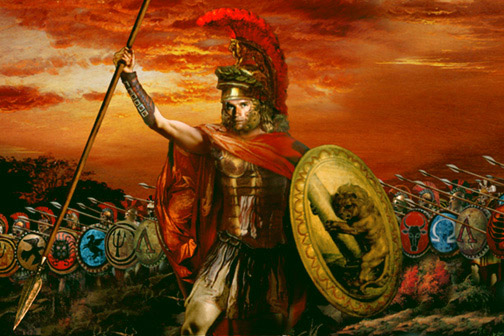
PROGRESS: 'The Man Who Conquered the World'
Begun way back in 2004, my 'poetical parsing' of the life of Alexander the Great (from Plutarch's Lives) continues here. It's sorta like one of those serial releases in magazine, except that: 1) it's not in print (and I can change the words any ol' time I want to); 2) I'm not getting paid per issue (or hardly at all); 3) the releases are on no regular schedule. In all other ways it's exactly like that.
Saturday, December 17, 2011

Friday, December 16, 2011

Shakespeare Authorship: Jefferson and Adams Visit to Stratford-upon-Avon
'After the war, Adams was appointed the first US minister to England. In the spring of 1786, he and Thomas Jefferson took a six-day tour of the English countryside that included a disappointing stop at Shakespeare’s birthplace at Stratford-upon-Avon. The house was “as small and mean as you can conceive,” wrote Adams in his diary. “There is nothing preserved of this great genius . . which might inform us what education, what company, what accident turned his mind to letters and drama.”'


'Our presidents have always loved Shakespeare. In April 1786, John Adams and Thomas Jefferson visited Shakespeare's birthplace at Stratford-upon-Avon. "They shew us an old Wooden Chair in the Chimney corner, where He sat," Adams wrote in his diary. "We cutt off a Chip according to Custom." Adams lamented that "[t]here is nothing preserved of this great Genius," with no apparent recognition that more might have been preserved if tourists had not taken away chips of the fixtures."'
Monday, December 12, 2011
"Make a Song"
Of a criminal caper
. . That goes all wrong
In the morning paper
. . Where stocks are long
With the unlit taper
. . (light's still strong)
Grab the windshield scraper
. . And make a song.
December 12, 2011


Sunday, December 11, 2011
A Charlottesville Songwriters Christmas

CD Release Show
Fellini’s #9
Friday, December 16 at 8pm
200 W. Market St., Charlottesville, VA
Admission is free
For more information: 434/979-4279 orcvillechristmascd@gmail.com
Subscribe to:
Posts (Atom)