Tuesday, August 30, 2011

Mystery About Paul McCartney's Death or Putative Death


Paul McCartney: Many Years From Now If you think John Lennon was the smart, arty Beatle while Paul was an empty head twittering prettily, this book will hip you to the facts. While John sat in the suburbs getting stoned to numb the pain of his imminent divorce, bachelor Paul was feeding his head by immersion in the London avant-garde. He pioneered the Beatles' experimental stuff, though his witty song-by-song account proves that it really was a 50-50 partnership--and some of the best innovations, like the snarling 1964 feedback intro to "I Feel Fine," happened by pure accident. Paul's insight into John's genius, which sprang from howling paranoia and a stark childhood, is still deeper than his insight into himself, but the book's true glory is its inside info on all those songs--the six tunes about John's marriage on A Hard Day's Night; Paul's heist of the "I Saw Her Standing There" bass line from Chuck Berry's "I'm Talking About You" (found on Berry's The Chess Box); the true meanings of "Norwegian Wood" (pine paneling, which the song's narrator burns to avenge the girl's refusal to have sex with him), "Got to Get You into My Life" ("you" is marijuana), and "Ob-La-Di Ob-La-Da" ("life goes on" in Yoruba). This book is even better than A Hard Day's Write: The Stories Behind Every Beatles' Song and Revolution in the Head. Here is the last word on the Beatles, inevitably slanted toward McCartney but generally more convincing than Lennon's own recollections. -- Tim Appelo

What are the major "Paul is dead" clues on Beatle album covers? by Robert Fontenot

'Paul Is Dead': Audio Clues

'Paul Is Dead': Visual Clues

Monday, August 29, 2011

Energy from Compost


Royal Incest

Elizabeth's Glass - The Mirror of the Sinful Soul by Marc Shell considered the 'best book so far on the specific psychological/political background of incest in the case of Elizabeth Tudor.'
  • Elizabeth's childhood and its rampant incestuous theme
  • one might say incest was the dominating dynamic of her young life
  • her choice at age eleven to translate Marguerite d'Navarre's confessional poem on spiritual incest as a gift for her stepmother the dowager Queen Catherine Parr
  • Marguerite was the mentor of Elizabeth's own mother Anne Boleyn
  • Marguerite was said to have had a passionate affair with her brother the French king
  • prefaces each chapter with a quote from Shakespeare, often from the incestuous closet scene of Hamlet and Gertrude.
(from Michael Dunn)
See Mark Taylor’s Shakespeare’s Darker Purpose: A Question of Incest. And Mark Anderson studies the Polonius-Ophelia relationship in the Winter 2000 edition of the Shakespeare-Oxford Society Newsletter (17-19, 24) in an article titled “Ophelia’s difference, or ‘To catch the conscience of the counselor’”
  • click on the Newsletters section of the SOS website
  • click on Fall 1999 to get the Winter 2000 issue
  • article begins on page 17
http://shakespeare-oxford.com/wp-content/Oxfordian/SOSNL_1999_4.pdf

(from Dan Wright)
In same issue, Winter 2000 Shakespeare-Oxford Newsletter: 'Why Pericles was not included in the First Folio' By Charles Boyle
"Incest is clearly in the background of plays like Hamlet and King Lear, among others, but nowhere is it so obvious as in Pericles. Here the father/daughter relationship is not only obvious, it is at the center of the play, and it is between a king and his daughter. . . If that is so, then Pericles is the one play that makes it all crystal clear, and might lead people to consider . . that . . incestuous behavior at the highest levels of Tudor society dated all the way back to the behavior of Henry VIII, and may have continued right on into the regime of Elizabeth I and her 'Shakespeare.'"

"Things Excite the Old Marxist"

Things excite the Old Marxist:
. . Blood in the Streets
. . . Burning buildings
. . . . Revolt.

Read Marx for the complete list:
. . Give the Establishment
. . . A bloody jolt.

August 29, 2011

'Much Ado About Nothing' Portland Performance (and Authorship)

Shakespeare’s Much Ado About Nothing will be performed by actors from Shakespeare-in-the-Parks on Sunday afternoon at 3:00pm in Concoridia University’s outdoor Ampitheatre–-the Theatre-in-the-Green, situated just outside the GRW library and the SARC-–on the CU campus. Join us (FREE), if you are in the area, for one of Shakespeare’s more transcendent comedies, set in Messina–-and one lavishly explicated by Dick Roe in his forthcoming book The Shakespeare Guide to Italy, a work that will leave no doubt in your mind about who wrote this play and when.

Hoping to see you for some frolicsome Shakespearean comedy on a balmy, sunny, Portland Sunday afternoon.

Prof. Daniel Wright, Ph.D.
Director, The Shakespeare Authorship Research Centre
Concordia University
Portland, OR 97211-6099
http://www.authorshipstudies.org

Thursday, August 25, 2011

John de Vere’s firstborn son

"Most commentators on Edward de Vere’s birth have found the christening cup warrant to be sufficient proof that he was, indeed, the legitimate son of John de Vere and Margery Golding.  (See, for example, Robert Brazil on Oxford’s nativity, the first eleven pages of Christopher Paul’s article on Prince Tudor theory, Part II, and Nina Green’s opening account of The Fall of the House of Oxford) A small but eloquent minority, however, continue to suspect that this document is somehow compromised, and that the true story of Edward de Vere’s birth may have been willfully obscured."

SEE: ~The EDWARD OXENFORD Review~

'The Story of the Learned Pig'

http://www.sirbacon.org/learnedpigbook.htm

Farewell to Paul and Devon

"Since Paul Curreri famously jumped on stage uninvited to provide backing vocals at a Devon Sproule gig, the magic of Curreri and Sproule has been a sort of emotional kryptonite to Charlottesville’s stolid, arms-folded concert audiences. But we’re going to have to start searching for a new Fred and Ginger, a new Bob and Joan, a new Sonny and Cher, because Paul Curreri and Devon Sproule are moving to Germany."

SEE: C-Ville: Feedback Column - Restless Farewell

Blue Line Highway & The Dish Dogs--9.1.11 @ 8:00pm

“Together they craft a diverse mix of country, jazz and bluegrass that is both lush and dramatic”—Josh Bearman, Style Weekly, Richmond, VA

“. . bona fide song writing ability and outstanding musicianship”—Paul Meeh, Indie Music Stop

“Mix up folk, rock, country, bluegrass, shake and pour”—Greg Hershey, Richmond.com

Blue Line Highway is a regional band touring from their home base in Richmond, VA. They’re followed for their eclectic mix of original music, unencumbered by a genre. They proclaim, “If the band were a box of cereal, we’d be the Snack Pack.” BLH has released five CDs in as many years, with more to come. Their music is played on hundreds of radio stations across the United States . . and one small station in Israel.

SEE: You can listen to all of their tunes at http://www.BlueLineHighway.com

DISH DOGS When Chris Howdyshell heard there was a super volcano underneath Yellowstone National Park that could explode any second, he figured it was time to amass the most talented group of dish-washing, bowl-licking, flea-collar-biting scalawags he could find. So, from the ashes of the Red River Rollercoaster rises a new breed of animal: The Dish Dog. With his ultra-experienced right-hand-man Doug Pitts crunking away on electric guitar, Chris searched open mics high and low and discovered Josh Vana and Michael Bowman hiding in the shadows of the mangy little grill. From the ape planet Funk Escape comes Kyle with the low end and suddenly there was 5. If only there was some sort of cohesion to glue this troop together...from the recently removed mountain tops arose the radical Lara Mack, with tambourine in hand the band was newly formed. There it is folks, singing our way through the ashes of the past and maybe a few from Yellowstone, we are ready to play.

SEE: http://www.myspace.com/thedishdogs

Mockingbird Restaurant
123 West Beverley Street
Staunton, VA 24401-4204
Call 540.213.8777 for dinner reservations in the Music Hall.

Tuesday, August 23, 2011

3-Year Difference

Child of Elizabeth?
"On how I determined Southampton was actually born three years earlier than we are lead to believe: a three-year time period alluded to by Prospero's discussion with Miranda in The Tempest (Act I scene 2); with Sonnet 104, which seems likely three years from Henry's birth in June. Queen Elizabeth may have been using an excuse of a ulcerous leg around the time of birth, as evidenced by The Private Character of Queen Elizabeth.

This squares with Elizabeth's fertility, as it occurred late in her 36th year, and the three years she spent deliberating before making a decision as to how to dispose of her 'baby problem'.

Of course this raises the question of how a three-year-old could impersonate a baby, but that's one of the benefits of having a monarchy. People will believe what you tell them to believe."
FROM: 'Synopsis of a Complete Theory of Shakespeare' by Alan Tarica (with his permission)

"The Crunchiest Nut in Crunchyville"

The crunchiest nut in Crunchyville
. . Has found a new milieu
He's parked his butt in Lyndonville
. . And bid his friends adieu.
August 23, 2011

Monday, August 22, 2011

"Oh Death, Oh Death" lyrics

Oh what is this, I cannot see
An icy hand takes hold on me?
Oh I am Death, that none can excel;
I open the door to heaven and hell

Oh Death, oh Death how can it be
That I must come and go with thee?
Oh death, oh death how can it be
For I'm unprepared for eternity?

Oh yes I've come for to get your soul,
Take your body and leave it cold;
I'll drop the flesh from off’n your frame,
The earth and worms both have their claim.

I’ll lock your jaw, so you can’t talk;
I’ll fix your feet, so you can’t walk;
I’ll close your eyes, so you can’t see:
This very hour, come and go with me.

Oh Death, oh Death please let me see
If Christ has turned his back on me.
When you were called and asked to bow,
You wouldn't take heed and it's too late now.

Oh Death, oh Death, please give me time
Too fix my heart, to change my mind.
Your heart is fixed, your mind is bound,
And I have the shackles to drag you down.

Farewell, farewell, to all farewell;
My doom is fixed I'm summoned to hell.
As long as God in heaven shall dwell,
My soul, my soul, shall scream in hell.

(traditional American folk song)

Stanley Brothers

Saturday, August 20, 2011

"Give Him His Due"

To make it through
. . To just survive
Give Him His due
. . By God alive.
August 20, 2011


Friday, August 19, 2011

"Coincidence is Saying"

Coincidence is saying . .
You're in the right place.

Coincidence is saying . .
You're on the right path.

Coincidence is saying . .
You're at the right pace.

Coincidence is saying . .
You used the right math.
August 19, 2011


Wednesday, August 17, 2011

The Best Way to Promote Your Site

"Apart from writing lots of good quality content every day, I made back links from a number of high page rank sites like Ezine, Go Articles, Squidoo, Hubpages, Yahoo Contributor Network, Triond, Factoidz, The Warrior Forum, DigitalPoint, Dmoz, and a few dozen other places.

The key is to steadily produce quality relevant content for your site every day, and make quality relevant back links to your site every day. That's it. Don't trust anyone who says that they will blast out a million blog comments, and have your site on the first page of Google overnight, cause I tried that on a test site, and got banished to the hundredth page of the SERPs.

All you really have to do, is write about a subject, and try to promote it on other sites. Don't focus too much on SEO, because if you just learn the basics, and stick at it, you will build a good page rank just from publishing regularly.

If you have any trouble with getting on the first page of Google, the next best way is to promote on the other most visited sites in the world like Facebook, You Tube, and Twitter."

SEE: The Best Way to Promote Your Site

Tuesday, August 16, 2011

Everything You Wanted To Know About The Three Jeff Buckley Movies Being Made

For whatever reason, everyone decided to make Jeff Buckley movies at the same time—and it's still causing confusion! But today it was announced that one more production has cast their leading man: Spider-Man: Turn Off The Dark star Reeve Carney. He'll begin filming in November... but at least one other production is starting sooner.

From what we can tell, there are three Jeff Buckley movies in the works right now. There's Greetings From Tim Buckley, which will star Penn Badgley as a pre-fame Buckley reconnecting with his father, Tim. This starts filming in Brooklyn on Monday.

Then there is Jake (son of Ridley) Scott's biopic. This is the one that just booked Carney to star in the role of Buckley. They also have the full support of the Buckley estate, exclusive rights to his songs, the go ahead from Leonard Cohen's camp to use Hallelujah (which Buckley famously covered), and help from Mary Guibert, Jeff's mother. This is the one being co-produced by Orian Williams, who previously said he wanted more of an unknown in the role; Scott called Carney, 'the perfect combination of musical prodigy, impish charm, innate intelligence and sensitivity to play Jeff.'

SEE: Gothamist

Spider-Man: Turn Off the Dark Star Reeve Carney Cast as Jeff Buckley in New Biopic

Move over, Penn Badgley. The official biopic about late singer Jeff Buckley — “official” because the untitled film is being executive produced by Buckley’s mother Mary Guibert — has found its young troubadour: Spider-Man: Turn Off the Dark star and singer Reeve Carney. How come the relative newcomer wound up leading the highly anticipated biopic of the late singer?

'We are over the moon that Reeve has agreed to take on this challenging role. I've seen him perform several times,' Guibert said in a statement about the casting. '[H]e's been getting ready for this all his life. It certainly doesn't hurt that he looks so much like Jeff.'

Directed by Jake Scott (Welcome to the Rileys, Ridley's son) and written by Ryan Jaffe, the untitled film will shoot in November in both New York and Memphis, where Buckley drowned at the age of 30. The film has no connection to Welcome to Tim Buckley, which features Gossip Girl star Badgley in the leading role.

SEE: Movieline

Monday, August 15, 2011

'Cucumber Blues'

Cucumber seedlings I planted this year drooped and died; the output has been puny. Then this . .


(for related song, check open mics in Lyndonville, Vermont region)

Sunday, August 14, 2011

Watch for the upcoming book . .

Bardgate: Shake-speare and the Royalists Who Stole the Bard by Peter W. Dickson
. . or . .
I, Shakespeare by Alan Green

Friday, August 12, 2011

e-Book Publishing Guide

http://workingwritersandbloggers.com/2011/08/09/a-guide-to-publishing-an-ebook-on-amazon-kindle-barnes-and-noble-and-smashwords/

Thursday, August 11, 2011

Prince Tudor II

The Prince Tudor Theory Part II advances the belief that Oxford was the son of Queen Elizabeth I, born in July 1548 at Cheshunt, England. This theory asserts that Princess Elizabeth, then fourteen years old, had a child by her stepfather, Thomas Seymour, and that the child of this affair was secretly placed in the home of John de Vere, 16th Earl of Oxford, and raised as Edward de Vere, 17th Earl of Oxford.

Oxford: Son of Queen Elizabeth I (2001) by Paul Streitz is the primary work advancing Prince Tudor Theory Part II. In addition to making Oxford the queen's son by Seymour, the book also revives the notion that the "Virgin Queen" had children by the Earl of Leicester. These were Robert Cecil, 1st Earl of Salisbury, Robert Devereux, 2nd Earl of Essex, Mary Sidney and Elizabeth Leighton. Finally, she bore Henry Wriothesley, who was the result of an incestuous relationship between Oxford and his mother, the Queen.

This aspect of the Prince Tudor Part II theory is not widely accepted among Oxfordians; most believe that the established date of birth for Oxford (April 12, 1550) is accurate. Thus Elizabeth (born September 7, 1533) would have been 17 years older than Oxford.

Streitz also asserts that Oxford did not die in 1604, but was abducted. The book claims that Oxford was banished to the island Mersea in the English Channel, where he completed Shake-speares Sonnets and The Tempest. He was also the "hidden genius" behind the King James Bible (published in 1611), the unified style of which indicates that it was written by "one clear hand", though much was retained from earlier translations.[25] He died at the end of 1608. This projected date of death is based on the claim that the first written statement referring to Oxford as deceased was in January 1609, followed by the publication of the sonnets ascribed to the "ever-living" poet. Streitz follows the common Oxfordian argument that "ever-living" is a euphemism for "deceased".

SEE: http://en.wikipedia.org/wiki/Prince_Tudor_theory

Wednesday, August 10, 2011

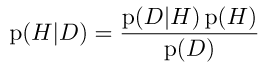
Let's Throw Baye's At It


MORE: Baye's Theorem

Alan Green and 'The Holy Trinity Solution'

'Alan has apparently found an immensely complex master code involving all of these dedications and inscriptions which, combined with John Dee's Enochian Tables can be made to reveal a specific place in Holy Trinity Church where something "very important" is hidden. This place turns out to be under one of the four consecration crosses on the altar of the church. The decoding of this requires knowledge of Free Masonry, Middle English, Latin, and anagramming skills. It is generally based on a 6-2-4 code (like the one Rollett found), but gets much more complicated.'
Review of Alan Green's presentation  titled "The Holy Trinity Solution: John Dee's Master Key Unites the Sonnet's Dedication with the Stratford Monument and Gravestone Inscriptions" given at the 14th Annual Shakespeare Authorship Conference, at Concordia University in Portland, Oregon April 2010.

FROM: http://oberonshakespearestudygroup.blogspot.com/

Tuesday, August 09, 2011

Lucy Luna for God

"Sus problemas son más grandes que su nobleza."
LUCY LUNA

'Took a Shine'

"Catherine Parr married Elizabeth’s father in July 1543, becoming Elizabeth’s stepmother. Although Elizabeth lived in her own household, she became close to Catherine and shared her Protestant sympathies. After her father’s death in January 1547, Elizabeth carried on visiting Catherine and eventually moved into her Chelsea home. Unfortunately, Catherine’s new husband, Thomas Seymour, took a shine to Catherine’s new charge and started acting rather inappropriately. His behaviour led to Catherine sending Elizabeth away to Sir Anthony Denny’s house in Cheshunt to protect Elizabeth and her reputation and also to save her own marriage. Catherine died in September 1548, just a few days after giving birth, Elizabeth lost yet another stepmother."

SEE: http://www.elizabethfiles.com/


Monday, August 08, 2011

London is Burning!!

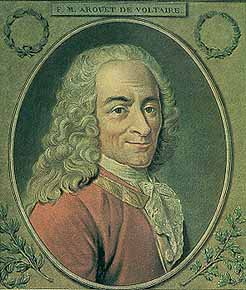
"Doubt is not a pleasant condition but certainty is absurd."
VOLTAIRE

What I'd Need to Do

What I'd need to do before, or as a part of, coming to any sort of understanding for myself of what Shakespeare's Sonnets are all about is . .
  1. Review history leading up to, and swirling around, the era of their supposed creation, and their actual printing--what was going on? who were the principal players?
  2. Consider all possible poets, and poetic talent. Many are identified and have works attributed to them; others are potential poets at this level, given their aristocratic education (and experience).
  3. Study the sonnet form, its history, what change the Elizabethan era wrought upon it, who else was working in it (e.g., Philip Sidney).
  4. Review efforts to decode the dedication page.
  5. Consider expert/academic commentary on individual Sonnets, sources likely used, possible meaning.
I might also set up a blind study, presumably of those who don't have a 'dog in the race' but are also quite capable of commenting on literature in this manner. I'd ask them to assess literary quality, writer gender (masculinity-femininity), writer age, and what comes up for them (who's writing whom, as in gender-age-type, and about what).

Charlton Ogburn and His Hunt for the Real Shakespeare

"Charlton Ogburn would have turned 100 this year, and there's no better tribute than revisiting his magnum opus about the 'Shakespeare Authorship Question.'

It’s best just to come right out and say it; people who think that there should be no such thing as a Shakespeare Authorship Question, that there’s absolutely no doubt that the supremely educated wordsmith who conceived the greatest plays ever written was an ordinary Joe turned incredible genius and somehow blessed with total insight into matters of upper-class court politics, haven’t been keeping up with the latest research."

SEE: Suite101.com


Sunday, August 07, 2011

Wait Till We See It First

"The trustees of the Shakespeare Fellowship met last evening to reconsider the motion passed last month concerning the statement posted on the Fellowship website regarding Roland Emmerich’s upcoming film, Anonymous. While a number of trustees still support the language on the posted statement, the board moved unanimously to withhold the statement on Anonymous and to remove it from the Fellowship website until a later date when members of the board have actually seen a preview of the film. Several board members have offered amendments to the statement which are under consideration, but no further action on this issue will be taken until we are certain of the content of the film."
EARL SHOWERMAN, Shakespeare Fellowship President, repudiating the fellowship's statement made June 15, 2011 titled: "The Shakespeare Fellowship commends Roland Emmerich for directing the film, Anonymous, but stresses that this production's 'Prince Tudor' narratives are not essential to the theory that the Earl of Oxford was the writer 'Shakespeare'".

'Worse Than a Puzzle-Peg'

"These sonnets, beginning at 127, to his Mistress, are worse than a puzzle-peg. They are abominably harsh, obscure & worthless. The others are for the most part much better, have many fine lines, very fine lines & passages. They are also in many places warm with passion. Their chief faults, and heavy ones they are, are sameness, tediousness, quaintness, & elaborate obscurity."
WILLIAM WORDSWORTH on Shakespeare's Sonnets (unverified)

Saturday, August 06, 2011

"When I Play Tricks"

When it happens to a hero
. . It's tragic
When it happens to me
. . Merely sad.

When Merlin does it
. . It's magic
When I play tricks
. . It's bad.
August 4, 2011

"Who Needs Romancing?"

A place for dancing
. . A place for song
Who needs romancing?
. . We've got King Kong.
August 4, 2011

Friday, August 05, 2011

'Old Bessie'

"[Twelfth Night] festivities include country dances, and the introduction of a "Fool Plough", a plough decked with ribands brought into the barn by a dozen mummers together with a grotesque "Old Bessie" (played by a man) and a Fool dressed in animal skins with a fool's hat."
Twelfth Night (holiday) at Wikipedia

"Two strange figures were seen in the Beltane festivities of long ago and both can still be seen today in some places. First, we have the she-male: a man dressed in women’s clothing, who was called Betsy, Bessie, Maggie, Molly, Cadi, etc. He is not just the comic character he appears to be. He is a representation of the First Cause, encompassing every thing and every polarity, a symbol of not just the Duality, but of the Totality Itself."
FROM: The Old Ways: Beltane by Doug and Sandy Kopf

Who Wrote the Sonnets?

A new book by a Tasmanian scientist argues that Shakespeare’s Sonnets were not written by the great bard, but by someone even more illustrious. Dr. Peter McIntosh of Hobart questions the traditional academic view that accepts that Shakespeare wrote the Sonnets.
“There is no doubt that there was an actor called William Shakespeare. But the orthodox belief that the actor Shakespeare wrote the immortal sonnets is just that – a belief. The only evidence we have that Shakespeare wrote the sonnets is his name on the title page. But this in itself does not prove authorship. There is no independent evidence such as a signed manuscript to prove that Shakespeare’s wrote the sonnets.”


Dr. McIntosh said there were several problems with the traditional authorship consensus, which the Shakespeare academic fraternity seems unwilling to consider. “For example, most of the sonnets are love poems addressed to a good-looking youth with a fair complexion. If Shakespeare wrote the sonnets, the obvious implication for the reader is that he was a homosexual. Would Shakespeare have risked publishing self-incriminating sonnets in his own lifetime? Another problem is the frequent reference in the sonnets to the author being old and near death. In Elizabethan times life expectancy was much lower than at present. Such a reference would mean that the author was in his late fifties or early sixties. But Shakespeare was only thirty or so, and in his prime of life when the sonnets were written. Even when aged fifty-one he wrote in his will that he was in good health. No scholars have ever explained this age discrepancy.”

Who Wrote Shakespeare's Sonnets?

"Shakespeare’s Sonnets undoubtedly describe very personal issues and also contain glimpses of his friends, references to relationships and rivals and comments about current events. However, despite analyses in hundreds of academic volumes and research papers, the world’s best literary minds have not yet reached a happy consensus concerning the friends, relationships, rivals and current events to which Shakespeare refers. The writer and editor Martin Seymour-Smith politely summed up the failure of the scholars: ‘Shakespeare’s Sonnets have had much learned ink wasted upon them.’
The theory I develop in this book is radical and some readers will be surprised by the conclusions drawn. I ask these readers to judge the validity of the conclusions on the strength of the evidence presented, and on the rationality of the argument, not on any preconceptions about what they think the conclusions should be."

Excerpted from 'Chapter One: The Sonnets Enigma' from Who Wrote Shakespeare's Sonnets? by Peter McIntosh

SEE: Oberon Shakespeare Study Group

Thursday, August 04, 2011

'Anonymous' Trailer

Sonnets by Mary, Queen of Scots?

The Casket Letters Discovered

On the 20th June 1567, a few days after Scottish rebels apprehended Mary, Queen of Scots, servants of James Douglas, 4th Earl of Morton, allegedly found a silver casket of . .
  • eight letters
  • two marriage contracts,* and 
  • twelve sonnets 
. . in the possession of James Hepburn, 4th Earl of Bothwell and third husband of Mary Queen of Scots.
------
'John Guy writes of how the sonnets found in the casket “were said to be Mary’s own reflections on her adultery” with Bothwell and proof “that her consuming passion for Bothwell gave her a powerful motive for murder.” However, Guy points out that they are highly unlikely to be genuine as “they are extremely clumsy and would pass only with the greatest difficulty as the work of a native French speaker” and they do not fit with the “genre of courtly love poetry” with which Mary was familiar. He also points out that they can be read as religious poetry.'

*which apparently proved that Mary had agreed to marry Bothwell before his divorce.

My Heart is My Own: The Life of Mary Queen of Scots, John Guy (2004)

SEE: The Elizabeth Files

Mary, Queen of Scots

Look-alikes?


Anne Vavasour (c.1560-c.1650) and . .


Henry Wriothesley, Third Earl of Southampton (1573-1624).

"In an early sonnet (3), in which the poet describes early acquaintance with the youth, there is a catty reference to the youth’s mother as being attractive in her prime."
PETER McINTOSH

Monday, August 01, 2011

Shakespeare! Darn that name!

"In our view, the most likely derivation of the name was an anglicization of the French given name, Jacques-Pierre, which was, and still is, pronounced “Shax-pyair,” or, “Shak-es-pyair.” (The French pronunciation has some soft g in it, but is really closer to sh.)  As French for James Peter, Jacques-Pierre was a favorite with French Catholics, as it combines the names of two of the Galilean apostles, James and (Simon) Peter."

SEE: politicworm

'If he existed . .'

"The King James translation of the Bible is considered the greatest piece of literature in English . . They say that from 1604 to 1611, King James got poets to translate, to write the Bible. Well, if Shakespeare existed, he was then the top poet around. But Shakespeare is nowhere reported connected with the Bible. If he existed, why didn't King James use him?"
Malcolm X (1925-1965)
Black American leader in his autobiography

Shakespeare Authorship: Why Listen?

If the argument that William Shakspere of Stratford-upon-Avon wrote the works generally ascribed to 'Shakespeare' is so strong, if the historical record is so 'unequivocal', why would the proponents of this view need to use tactics such as:
  • converting 'Shakspere' directly to 'Shakespeare', skipping the fact that
    • he never called himself that in life
    • the works were originally ascribed to 'Shake-speare' (formed as, and very likely, a pen name designed to cover the real author's name)
  • pretending that there exist 70+ serious 'claimants' to authentic authorship, when only a handful have ever been actually proposed with any real support
If those who believe William Shakspere of Stratford-upon-Avon wrote the works generally ascribed to 'Shakespeare' have to resort to these tactics, why listen to them or their arguments?